Britain's political class has converged on a consensus of managed decline. Both parties offer the same answer — more state, more spending, more control. Fighting for a Free Future exists because managed decline isn't management. It's surrender.
This is not a distant economic threat. The reckoning is here. Britain's National Insurance Fund — the mechanism that pays state pensions and funds the safety net — is projected to default by 2043-44. That's not a warning for another generation. It's a deadline for this one.
The numbers tell a story that politicians on both sides have spent decades refusing to read.
Housing is unaffordable. Real wages have stagnated. Public services are deteriorating despite historically high taxation. Interest payments on government debt have doubled year-over-year. Behind closed doors, many MPs acknowledge the truth — but electoral incentives keep them silent. This is the space Fighting for a Free Future occupies. The arguments too important to leave unsaid.
The old left-right paradigm is obsolete. The real division in British politics is not between Labour and Conservative — it's between two fundamentally different visions for how society should work.
On one side: voluntary cooperation in a free society. Markets as engines of cooperation and prosperity. Decisions made at the most local level possible. Individuals and communities choosing their own paths. Big society, not big government.
On the other: coercive management by authority. Central planning. Top-down control. The assumption that the state knows better than the people it governs. This is the model both parties have converged on — and it has produced low growth, stagnant productivity, housing unaffordability, monetary instability, regulatory sclerosis, and social fragmentation.
Fighting for a Free Future argues for the first vision. Not because it's theoretically elegant — but because the alternative is visibly, measurably failing. The evidence is in the numbers above. The only question is whether we choose reform or wait for collapse.
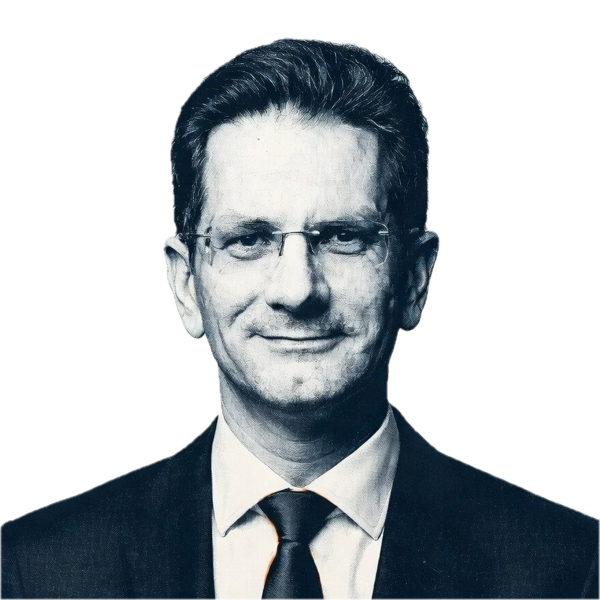
If the honourable Gentleman uses the word 'ideological' to accuse me of having thought about how society works and what the law ought to be, of course I plead guilty.Steve Baker · House of Commons, 2010
Fighting for a Free Future is built on twelve foundational principles, drawn from Dr. Nigel Ashford's work. These are not abstract ideals — they are the conditions under which free societies prosper.
Voluntary associations between individuals — the fabric that holds communities together, increasingly undermined by state expansion.
The peaceful removal of those in power through elections. Not mob rule — structured accountability.
One law, applied uniformly, without double standards or special privileges for those in power.
The right to create, trade, and compete — diminished by corporatism, regulatory capture, and state favouritism.
The individual's sphere of action — shrinking year by year under the weight of legislation and regulation.
Universal safeguards for every person — not identity-group privileges or political instruments.
Impartial law enforcement. The rule of law means nothing if enforcement is selective.
Social order based on consent, not coercion. A free society is a peaceful society.
The right to own and control — undermined by arbitrary restrictions, compulsory purchase, and planning regimes.
One law for all, equally applied. The foundation on which every other freedom depends.
The emergent patterns that arise from free interaction — not designed by any central planner, but more effective than anything a committee could produce.
Peaceable coexistence despite disagreement. The willingness to let others live differently — the hardest principle and the most essential.
Steve Baker spent thirty years inside the machine — Royal Air Force, software engineering, then Parliament. He served as a government minister in the Cabinet Office, Northern Ireland Office, and as a Brexit minister. He saw how the system works from every angle.
He lost his seat in the 2024 election. Instead of retreating to the private sector, he built Fighting for a Free Future — because the arguments for freedom needed a platform that wasn't constrained by party whips, electoral calculation, or institutional caution.
Fighting for a Free Future launched in September 2025 as a cross-institutional coalition. The Insurgency podcast followed immediately. The Substack, Voices for a Free Future, had already been building an audience since mid-2024.
Today the team includes Harry Richer as Director and podcast co-host, and Liam Noble Shearer as Operations Manager — alongside a growing roster of guest writers from think tanks, journalism, and the next generation of pro-freedom voices.
Free essays, podcast episodes, and the arguments that matter. Delivered weekly to people who think Britain deserves better.
Free. No spam. Unsubscribe anytime.